
Best CO2 Fractional Laser Treatment in Delhi
Open pores and acne pits are common skin concerns that can affect the appearance and texture of the face. Many people notice enlarged pores around the nose, cheeks and forehead, while others develop small depressions or uneven areas after acne. These concerns can make the skin appear rough, uneven or less smooth, even when active acne has disappeared. With advancements in aesthetic dermatology, several professional treatments are available to improve the appearance of enlarged pores and depressed acne scars. Options may include microneedling, radiofrequency microneedling, fractional laser resurfacing, chemical peels, subcision and other customised procedures. If you are searching for the best treatment for open pores and acne pits in Delhi, the first step is understanding that these are two different skin conditions. Enlarged pores are natural openings of hair follicles and oil glands, whereas acne pits are depressed scars caused by damage to deeper skin structures. Treating both concerns with the same procedure may not always produce the best outcome. This guide explains the causes of open pores and acne pits, available treatment options, expected results, recovery, aftercare and factors to consider before choosing a professional skin treatment in Delhi. Understanding Open Pores and Acne Pits Before choosing a treatment, it is important to understand the difference between enlarged pores and acne pits. What Are Open Pores? Pores are tiny openings on the skin’s surface. They allow sebum, or natural skin oil, and sweat to reach the surface. Every person has pores, and their visibility varies according to genetics, skin type, age and other factors. When pores become more noticeable, the skin may appear uneven or textured. Enlarged pores are commonly visible around the nose, cheeks and forehead. Several factors can contribute to visible pores: Pores cannot be permanently closed because they are a normal part of skin anatomy. However, suitable skincare and professional procedures may help reduce their visible appearance. What Are Acne Pits? Acne pits are depressed scars that remain after inflammatory acne damages the skin. They develop when the skin does not produce enough healthy tissue during the healing process. These scars can create small holes, depressions or uneven areas on the cheeks, temples and other parts of the face. Acne pits are also called atrophic acne scars. Their appearance depends on their depth, width, shape and attachment to underlying tissue. The three common types are: 1. Ice-Pick Scars Ice-pick scars are narrow, deep depressions that extend into the skin. They often look like small holes or puncture marks. Because they are deep and narrow, they may require targeted treatments rather than general surface resurfacing alone. 2. Boxcar Scars Boxcar scars have wider depressions with clearly defined edges. They may be shallow or deep and are commonly seen on the cheeks and temples. 3. Rolling Scars Rolling scars create a wave-like appearance on the skin. They are often caused by fibrous bands that pull the skin downward, creating uneven depressions. Each type of acne scar responds differently to treatment. A professional assessment is necessary before selecting a procedure. Why Do Open Pores and Acne Pits Develop? Open pores and acne pits can develop for different reasons. Understanding the cause helps determine which treatment is most suitable. 1. Excess Oil Production People with oily skin may notice more visible pores, particularly around the nose and cheeks. Excess sebum can combine with dead skin cells and make the openings appear more noticeable. 2. Genetics Pore size is partly influenced by genetics. Some people naturally have more visible pores even when they maintain a regular skincare routine. 3. Previous Acne Breakouts Inflammatory acne can damage the deeper layers of the skin. When the skin heals without producing enough supporting tissue, depressed scars may develop. 4. Sun Exposure Long-term ultraviolet exposure can damage collagen and elastin. This may reduce the support around pores and contribute to more visible skin texture changes. 5. Ageing and Collagen Loss As people age, collagen and elastin gradually decrease. The skin may lose firmness, making pores and existing scars more noticeable. 6. Picking or Squeezing Pimples Repeatedly squeezing, scratching or picking acne lesions can increase inflammation and tissue damage. This may raise the risk of permanent acne scarring and pigmentation. 7. Delayed Acne Treatment Severe or persistent inflammatory acne can increase the likelihood of scarring. Treating active acne early is important to reduce the risk of new acne pits. Best Treatments for Open Pores in Delhi The most suitable treatment for enlarged pores depends on the underlying cause, skin type, oil production, age and degree of skin texture changes. There is no single treatment that works equally well for everyone. 1. Microneedling Treatment Microneedling is a professional procedure that uses a device with fine sterile needles to create controlled micro-injuries in the skin. These micro-injuries activate the skin’s natural repair response and stimulate collagen production. As the skin remodels, its overall texture may improve, and enlarged pores may become less noticeable in selected patients. Potential benefits: Microneedling usually requires a series of sessions. The number and interval depend on the skin concern and professional assessment. It is important to choose a qualified provider. At-home devices that puncture the skin can cause infection, irritation and scarring if used incorrectly. 2. Radiofrequency Microneedling Radiofrequency microneedling combines fine needles with radiofrequency energy. The needles deliver controlled energy into selected skin layers, supporting collagen remodelling. This treatment may be considered for enlarged pores, selected acne scars and uneven skin texture. Potential benefits: Treatment intensity should be selected according to skin type, scar pattern and treatment goals. Temporary redness, swelling and sensitivity may occur. Radiofrequency microneedling is not suitable for every patient. Active infections, certain inflammatory conditions and other medical factors need to be assessed first. 3. Fractional CO2 Laser Treatment Fractional CO2 laser is an ablative skin-resurfacing procedure that creates controlled microscopic treatment zones in the skin. The treatment activates the healing response and supports collagen remodelling. It may improve selected acne scars, uneven texture and the appearance of enlarged pores. Potential benefits: Fractional CO2 laser usually involves
Best CO2 Fractional Laser Treatment in Delhi: Benefits, Procedure, Results, Recovery and Aftercare
Healthy, smooth and youthful-looking skin is something many people want, but concerns such as acne scars, open pores, fine lines, wrinkles, uneven texture and visible signs of ageing can affect skin confidence. Skincare products and regular facials may improve the appearance of the skin, but deeper texture concerns often require professional evaluation and advanced aesthetic treatments. CO2 Fractional Laser Treatment is an advanced skin-resurfacing procedure used to improve selected skin texture concerns. It works by delivering controlled laser energy to microscopic areas of the skin, stimulating the body’s natural healing response and supporting collagen remodelling. It may be considered for acne scars, certain types of scars, fine lines, sun-damaged skin and uneven skin texture. If you are searching for the best CO2 Fractional Laser Treatment in Delhi, it is important to understand how the procedure works, who may benefit from it, what recovery involves and what results can realistically be expected. Choosing the right professional and treatment plan is just as important as selecting the laser technology. This detailed guide explains the CO2 fractional laser procedure, its benefits, limitations, safety considerations, aftercare and factors to consider before booking a consultation in Delhi. What Is CO2 Fractional Laser Treatment? CO2 Fractional Laser Treatment is a type of fractional ablative laser resurfacing procedure. It uses carbon dioxide laser energy, typically at a wavelength of 10,600 nanometres, to create controlled microscopic treatment zones in the skin. These tiny treatment zones stimulate a healing response. The surrounding untreated skin helps support recovery, while the treated areas undergo repair and remodelling. This process can encourage new collagen formation and improve the appearance of selected skin texture concerns. The term “fractional” refers to the way the laser treats small portions of the skin rather than removing the entire surface at once. The exact depth, density and intensity of treatment depend on the device, settings, treatment area and the patient’s skin condition. CO2 fractional laser is different from a regular facial, chemical peel or non-ablative laser. It is a medical skin-resurfacing procedure that requires careful patient selection, appropriate equipment, trained professionals and a proper recovery plan. Why Is CO2 Fractional Laser Treatment Popular in Delhi? People in Delhi experience different environmental and lifestyle factors that can affect skin health. Sun exposure, pollution, heat, humidity changes, acne, stress and inconsistent skincare habits may contribute to visible skin concerns. Some people develop acne scars during their teenage years, while others notice uneven texture, fine lines or sun-related skin changes as they grow older. These concerns may not always respond sufficiently to ordinary skincare products. CO2 fractional laser treatment attracts attention because it can address selected deeper texture concerns through controlled resurfacing. People commonly explore this procedure for: However, the procedure is not suitable for every person or every skin concern. A qualified professional must assess the skin and determine whether fractional CO2 laser is appropriate. How Does CO2 Fractional Laser Work? CO2 fractional laser works by delivering focused laser energy into controlled microscopic areas of the skin. This creates tiny columns of thermal injury surrounded by untreated tissue. The controlled injury activates the skin’s natural repair process. During healing, the body produces new tissue and remodels collagen. Over time, this may improve the appearance of scars, fine lines and uneven texture. The process can be understood in three stages. 1. Controlled Laser Treatment The laser creates microscopic treatment zones in the selected skin area. The settings are chosen according to the treatment goal, skin type, scar characteristics and professional assessment. 2. Natural Healing Response After treatment, the skin begins its repair process. Temporary redness, swelling, warmth, sensitivity, small crusts and peeling may occur as the treated areas heal. 3. Collagen Remodelling Collagen remodelling continues after the initial healing period. This is why improvements in skin texture may develop gradually rather than appearing immediately after the procedure. The final outcome depends on the original skin concern, treatment intensity, healing response, aftercare and individual characteristics. Skin Concerns That CO2 Fractional Laser May Help Improve CO2 fractional laser is mainly considered for selected skin resurfacing and texture-related concerns. The treatment plan should be based on a proper diagnosis rather than choosing a laser simply because it is popular. 1. Acne Scars Acne scars are among the common reasons people explore fractional CO2 laser treatment. When inflammatory acne damages deeper skin structures, it can leave depressed or uneven scars. These scars may remain visible even after active acne has stopped. Fractional CO2 laser may help improve the appearance of selected atrophic acne scars by stimulating collagen remodelling and resurfacing parts of the skin. Different acne scars respond differently: It is important to understand that no single laser treatment can completely remove every acne scar. Some patients may benefit from a combination approach involving treatments such as subcision, microneedling, targeted scar procedures or fractional laser resurfacing. 2. Open Pores Visible pores are a common skin concern, particularly around the nose, cheeks and forehead. Pore appearance can be influenced by genetics, sebum production, ageing, sun damage and changes in skin elasticity. CO2 fractional laser may improve the surrounding skin texture in selected patients, making pores appear less noticeable. However, it does not permanently close pores or remove their natural structure. People with oily skin or enlarged pores should receive an assessment to understand whether resurfacing is likely to help or whether another treatment would be more appropriate. 3. Uneven Skin Texture Skin texture may become uneven due to acne, old scars, sun damage and natural ageing. The surface can appear rough, bumpy or irregular. Fractional resurfacing may help improve selected texture irregularities by stimulating the skin’s repair and collagen-remodelling processes. The extent of improvement depends on the depth and cause of the texture concern. 4. Fine Lines and Wrinkles Fine lines can develop due to natural ageing, repeated facial movements, sun exposure and gradual changes in collagen and elastin. CO2 fractional laser may improve selected fine lines by resurfacing the skin and stimulating collagen remodelling. It may be considered for areas such as the
Best Cosmelan Treatment in Delhi: A Complete Guide to Pigmentation, Melasma, Benefits, Procedure and Results
Pigmentation, melasma, dark spots and uneven skin tone are common concerns for people living in Delhi. Regular sun exposure, heat, hormonal changes, pollution and post-acne marks can make pigmentation more noticeable and difficult to manage. While skincare products may help with mild discolouration, stubborn pigmentation often requires a professionally planned treatment. Cosmelan is a professional depigmentation treatment designed to improve the appearance of different types of excess pigmentation. It combines an in-clinic application with a structured home-care routine to help regulate melanin production and improve skin tone over time. If you are searching for the best Cosmelan treatment in Delhi, understanding how the treatment works, who may benefit from it, what results to expect and why professional guidance matters is essential. The right treatment should always be selected after assessing your skin type, pigmentation pattern, medical history and expectations. At Facethetics Beauty, patients can explore personalised aesthetic and skin-care guidance under the expertise of Dr. Swati Mittal Aggarwal. Before choosing any pigmentation procedure, it is important to understand whether Cosmelan is suitable for your particular concern. What Is Cosmelan Treatment? Cosmelan is a professional depigmentation method used to improve the appearance of unwanted dark patches and uneven skin tone. It is designed to target the processes involved in melanin production, helping reduce the visibility of existing pigmentation and supporting better pigment control. Melanin is the natural pigment responsible for the colour of our skin, hair and eyes. It is produced by specialised cells called melanocytes. When melanin production becomes excessive or uneven in certain areas, dark patches and spots may develop. Cosmelan uses a combination of depigmenting ingredients in a professionally supervised treatment programme. The process generally includes an initial in-clinic mask application followed by a home-care phase. The home routine is an important part of the method and should be followed according to the treating professional’s instructions. Unlike a simple facial or ordinary exfoliating treatment, Cosmelan is a structured pigmentation-management programme. It requires patience, consistent aftercare and sun protection. Why Is Cosmelan Treatment Popular in Delhi? Delhi experiences strong sunlight for much of the year, and outdoor exposure can contribute to tanning, uneven pigmentation and the worsening of certain pigmentary conditions. People who travel frequently, work outdoors or spend long hours commuting may find that dark spots become more noticeable over time. Several factors can contribute to pigmentation: Cosmelan is often considered by people who want professional help for persistent pigmentation. However, not every dark spot is the same. A dermatologist or appropriately qualified medical professional should identify the cause before recommending a treatment. Which Skin Concerns Can Cosmelan Help Improve? Cosmelan may be considered for selected cases of excess pigmentation. Its suitability depends on the depth, cause, distribution and activity of the pigmentation. 1. Melasma Melasma is a common pigmentation condition that usually appears as brown or grey-brown patches on the cheeks, forehead, upper lip or chin. It can be associated with hormonal changes, genetic factors and sun exposure. Melasma can be persistent and may return even after improvement. Cosmelan may be considered as one part of a professionally supervised pigmentation-management plan. Long-term sun protection and maintenance care remain important. 2. Sun Spots Sun spots are flat, brown areas that develop on skin exposed to sunlight over time. They are commonly seen on the face, forehead, cheeks and other exposed areas. A professional assessment is important because not every brown spot is a harmless sun spot. Any changing, irregular, bleeding or unusual lesion should be medically examined before cosmetic treatment. 3. Post-Inflammatory Hyperpigmentation Post-inflammatory hyperpigmentation, often called PIH, can develop after acne, inflammation, irritation or injury. It appears as flat dark marks that remain after the original skin problem has settled. Cosmelan may be an option for selected cases, but active acne, irritation and the tendency to develop dark marks must be considered before treatment. 4. Uneven Skin Tone Some people experience patchy discolouration across different parts of the face. This may result from sun exposure, previous inflammation or other pigmentary conditions. A suitable pigmentation programme may help improve the appearance of uneven tone, but the expected outcome depends on the underlying cause. 5. Freckles and Other Pigmented Spots Certain superficial pigmented spots may respond to depigmenting approaches. However, freckles, lentigines, melasma and other pigmented lesions are not identical conditions. A proper diagnosis is necessary before choosing Cosmelan. How Does Cosmelan Treatment Work? Cosmelan is designed to work through a combination of professional treatment and continued home care. Its depigmenting ingredients help regulate processes associated with melanin production and support the improvement of existing pigmentation. The treatment is generally divided into two main stages. Stage 1: Professional In-Clinic Application The process begins with a consultation and assessment of the patient’s skin. The professional reviews the type of pigmentation, skin sensitivity, previous treatments and medical history. After preparing the skin, the prescribed Cosmelan mask is applied according to the manufacturer’s protocol and the individual’s skin characteristics. The mask remains on for a specific period determined by the treating professional. The application time should never be guessed or copied from another person’s treatment. Skin type, pigmentation severity and the professional protocol all matter. Stage 2: Home-Care Programme The home-care stage is essential to the overall treatment method. After the initial mask phase, the patient follows a prescribed skincare routine using the recommended products. This stage supports continued pigment control and helps maintain the progress achieved during the professional application. The exact routine, frequency and duration should be explained by the treating professional. Patients should not independently increase product frequency or add strong exfoliating products to speed up results. Step-by-Step Cosmelan Treatment Procedure If you are considering Cosmelan treatment in Delhi, knowing what generally happens during the process can help you prepare. Step 1: Skin Consultation The first step is a detailed consultation. The professional examines the pigmentation and discusses how long it has been present, whether it changes with sun exposure, and whether the patient has used any previous treatments. Your medical history, allergies, current skincare products and any
Best Masseter Botox Treatment: A Complete Guide to a Slimmer and More Defined Jawline
A well-defined jawline and balanced facial features are important aspects of facial aesthetics. However, some individuals naturally have a broad or square-shaped lower face because of enlarged masseter muscles. These muscles are located on both sides of the jaw and play an essential role in chewing and biting food. When they become overdeveloped, they can make the lower portion of the face appear wider and more prominent. Best Masseter Botox Treatment in Delhi is a popular non-surgical aesthetic procedure for individuals who want to achieve a slimmer-looking jawline without undergoing invasive surgery. The treatment involves injecting botulinum toxin type A into carefully selected areas of the masseter muscles. This temporarily reduces muscle activity and may gradually decrease muscle volume, resulting in a softer and more contoured facial appearance. Delhi has a growing aesthetic dermatology and cosmetic treatment market, with patients exploring non-surgical options for facial enhancement. Masseter Botox is one such option for people who want to improve facial proportions while maintaining a natural appearance. The procedure does not require surgical incisions, stitches or general anaesthesia. It is generally performed in a clinical setting, and most patients can return to their regular activities shortly after treatment. In this comprehensive guide, we will explain everything about masseter Botox in Delhi, including how it works, who is suitable for the procedure, its benefits, treatment process, expected results, possible side effects and aftercare. What Is Masseter Botox Treatment? Masseter Botox is a non-surgical cosmetic procedure that uses botulinum toxin injections to temporarily relax the masseter muscles. The masseter muscles are among the strongest muscles involved in chewing. They are positioned on both sides of the lower face, extending from the cheekbone region to the lower jawbone. When these muscles become enlarged, they can create a square-shaped or bulky appearance around the jawline. Masseter Botox works by reducing the nerve signals responsible for muscle contraction. As muscle activity decreases, the masseter muscles may gradually reduce in size. This can help improve the appearance of the lower face by creating: Unlike surgical jaw reduction, masseter Botox does not remove or reshape the jawbone. It specifically targets enlarged muscles. Why Is Masseter Botox Popular in Delhi? Delhi is a major destination for dermatology, aesthetic medicine and non-surgical cosmetic procedures. People from different parts of Delhi NCR explore treatments that offer facial enhancement without extensive recovery periods. Masseter Botox is particularly relevant for individuals who have a broad lower face due to enlarged jaw muscles. Some common reasons patients explore this treatment include: 1. Desire for a Slimmer Facial Appearance A wide lower face can sometimes make the face appear heavier or more square-shaped. Masseter Botox may help reduce the appearance of excessive muscle volume. 2. Non-Surgical Facial Contouring Many patients prefer non-surgical treatments because they do not involve the recovery associated with jaw surgery. 3. Treatment for Enlarged Jaw Muscles Masseter hypertrophy can occur because of genetics, habitual jaw clenching or repeated muscle activity. Botox may be considered when muscle enlargement is responsible for the prominent jawline. 4. Minimal Downtime The procedure generally requires little downtime, making it convenient for people with busy professional and personal schedules in Delhi. 5. Interest in Facial Balance Aesthetic treatment planning focuses on overall facial harmony rather than simply making one facial feature smaller. What Causes Enlarged Masseter Muscles? Before choosing masseter Botox treatment in Delhi, it is important to understand why the jaw muscles may become enlarged. Genetics Some individuals naturally have larger masseter muscles because of their genetic facial structure. This may result in a broad lower face even when their body weight is within a healthy range. Teeth Grinding Bruxism refers to repetitive grinding or clenching of teeth. It may occur during sleep or while awake. Repeated muscle activity can contribute to masseter enlargement in some individuals. Frequent Jaw Clenching Some people unconsciously clench their teeth during stressful situations, concentration or everyday activities. Over time, repeated contraction may contribute to excessive masseter muscle activity. Habitual Chewing Frequent gum chewing or repeatedly chewing particularly tough foods may increase jaw muscle activity. However, the extent to which these habits affect muscle size varies between individuals. Natural Facial Anatomy A broad jawline is not always caused by enlarged muscles. Bone structure, facial fat distribution and skin laxity can also contribute to facial width. A professional assessment is necessary to identify the actual cause. Who Is Suitable for Masseter Botox in Delhi? Masseter Botox may be suitable for adults who have enlarged masseter muscles and want to improve their lower facial contour without undergoing surgery. You may be a potential candidate if: The procedure may also be considered for selected patients with excessive masseter muscle activity associated with jaw clenching. However, not every individual with a broad jawline is suitable. If the facial width is primarily caused by bone structure or excess facial fat, masseter Botox may not produce the desired results. A qualified dermatologist or appropriately trained medical professional should evaluate your facial anatomy and medical history before recommending treatment. How Does Masseter Botox Work? Masseter Botox works by temporarily reducing the communication between nerves and the targeted muscles. Botulinum toxin type A acts at the neuromuscular junction by inhibiting the release of acetylcholine, a chemical messenger responsible for muscle contraction. When the masseter muscle receives fewer contraction signals, its activity decreases. Over time, reduced muscle activity may cause a gradual reduction in muscle thickness. This process is commonly referred to as muscle atrophy. The treatment generally progresses through three stages. Stage 1: Muscle Relaxation After the injections, the medication begins reducing muscle contraction. Stage 2: Gradual Muscle Reduction Over the following weeks, the targeted muscle may gradually decrease in volume. Stage 3: Improved Jawline Appearance As the masseter muscle becomes smaller, the lower face may appear narrower and more defined. The degree of improvement depends on initial muscle size, facial anatomy, product formulation, injection technique and individual response. Step-by-Step Masseter Botox Procedure in Delhi Masseter Botox is generally performed as an outpatient procedure by a qualified medical professional.
Best Glutathione IV Drip in Delhi: Your Complete Guide to Safe, Glowing Skin (2026)
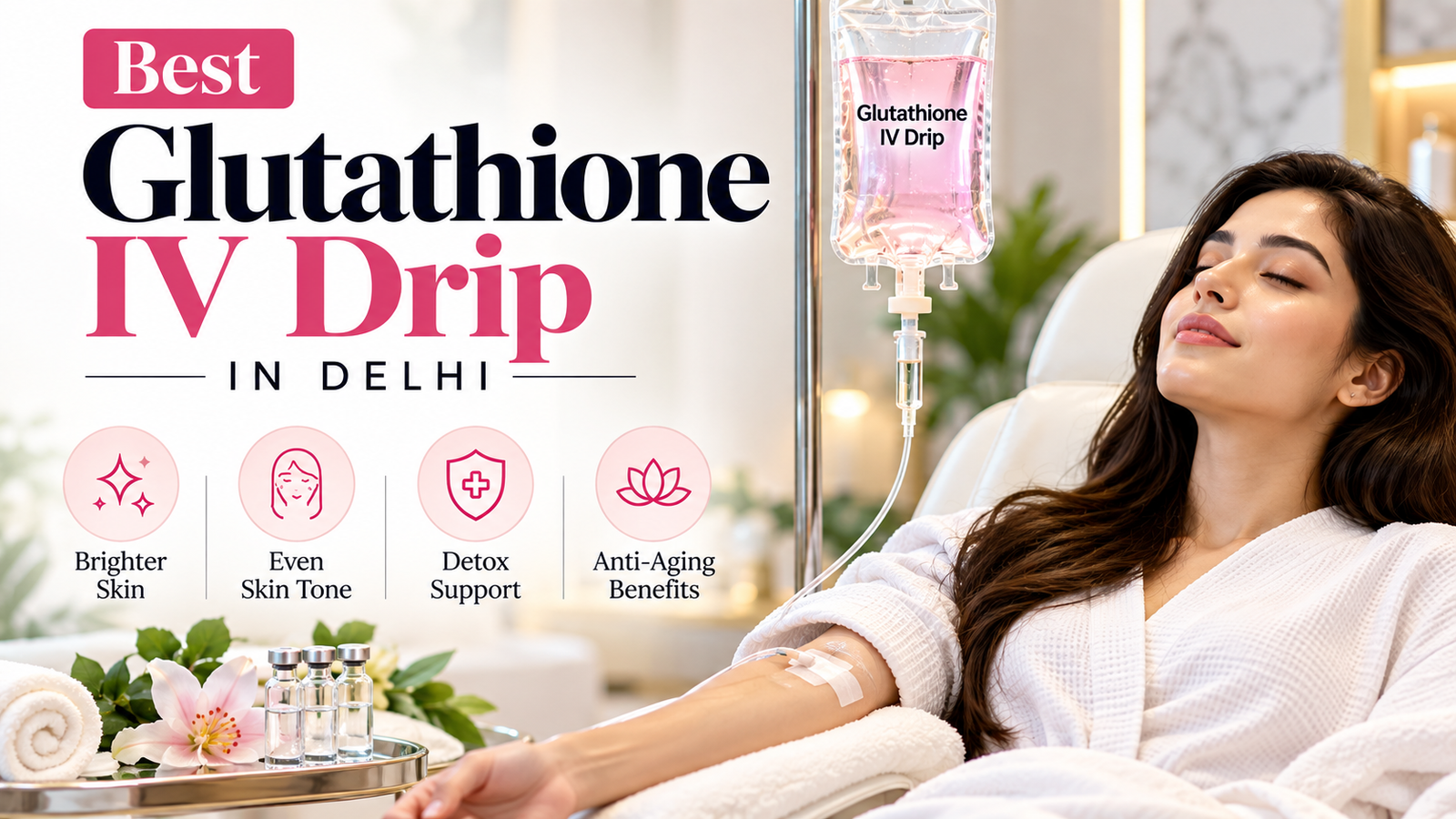
If you’ve been searching for the best glutathione IV drip in Delhi, chances are you’ve come across dozens of clinics promising instant fairness, flawless skin, and overnight transformation. The truth is a little more nuanced — and a lot more interesting. Glutathione IV therapy, when done correctly under professional supervision, can be a safe and effective part of a broader skin health and wellness routine. But not all clinics, protocols, or products are created equal. At Facethetics Beauty, we’ve put together this detailed guide to help you understand what glutathione IV drips actually do, who they’re suitable for, what to expect during treatment, and how to choose a clinic in Delhi that prioritizes your safety as much as your glow. What Is Glutathione and Why Is It So Popular in Delhi’s Skincare Scene? Glutathione is a naturally occurring antioxidant produced by the liver. It’s made up of three amino acids — glutamine, glycine, and cysteine — and plays a central role in detoxification, immune support, and cellular repair throughout the body. In recent years, glutathione has become closely associated with skin brightening and anti-aging treatments, largely because of its role in inhibiting melanin production. This has made glutathione IV drips one of the most requested treatments at aesthetic and wellness clinics across Delhi NCR, alongside our IV Vitamin Therapy programs and Skin Brightening Treatments. It’s worth noting upfront: glutathione is not a magic fairness injection, and reputable clinics won’t market it that way. Its effects vary from person to person, depend heavily on dosage, frequency, and individual skin biology, and work best as part of a holistic skincare and wellness plan rather than a standalone miracle fix. How Does Glutathione IV Therapy Work? When administered intravenously, glutathione bypasses the digestive system entirely, allowing for significantly higher absorption compared to oral supplements or tablets. Once in the bloodstream, it is believed to: Because IV administration delivers the compound directly into circulation, results are often reported to be more noticeable and consistent than with oral glutathione — though outcomes should always be discussed with a certified medical professional, not promised as guaranteed. Who Should Consider a Glutathione IV Drip? Glutathione IV therapy is generally considered by people who are looking for: However, it is not suitable for everyone. Pregnant or breastfeeding women, individuals with G6PD deficiency, those with certain kidney or liver conditions, and people with known allergies to any drip components should avoid this treatment or seek explicit medical clearance first. This is precisely why a proper medical consultation — not a walk-in sales pitch — should always precede treatment. Why the “Best” Clinic Matters More Than the “Cheapest” One Delhi has no shortage of clinics offering glutathione drips at rock-bottom prices, sometimes bundled as “fairness packages.” This is where caution is essential. IV therapy is a medical procedure, not a beauty parlor service, and it should always be treated as such. Here’s what actually separates a trustworthy clinic from a risky one: 1. Qualified Medical Supervision IV drips should only be administered by licensed doctors or trained nurses under medical supervision — never by unqualified staff. At Facethetics Beauty, every IV therapy session is overseen by certified medical professionals who conduct a proper pre-treatment consultation. 2. Personalized Dosage and Screening No two bodies respond the same way. A responsible clinic will review your medical history, run necessary screenings, and customize the treatment plan rather than offering a one-size-fits-all package. 3. Sterile, Hygienic Setup IV therapy involves needles and direct bloodstream access. The clinic’s hygiene standards, sterilization protocols, and use of single-use, medical-grade equipment are non-negotiable. 4. Transparent Ingredient Sourcing Ask where the glutathione is sourced from, whether it’s FDA/CDSCO-approved, and what concentration is being used. Clinics that dodge this question are a red flag. 5. Realistic Expectations, Not Overpromises Be wary of any clinic promising “guaranteed fairness in 3 sessions” or similar claims. Skin response varies, and ethical clinics will always set realistic expectations rather than sell a fantasy. 6. Post-Treatment Support A good clinic doesn’t disappear after the drip. Follow-up care, monitoring for side effects, and skincare guidance should be part of the package — something we emphasize as part of our Aftercare Program. What Happens During a Glutathione IV Session? If you choose to go ahead with treatment, here’s a general idea of what the process typically looks like at a professional clinic: The entire session usually takes between 30 to 60 minutes, though this can vary based on the specific protocol your doctor recommends. Glutathione IV Drip Cost in Delhi: What Influences the Price? Pricing for glutathione IV drips in Delhi varies widely based on several factors: Rather than chasing the lowest price, it’s far more important to evaluate the qualifications of the medical team and the quality of the facility. A cheaper drip administered without proper screening or hygiene standards can end up costing you far more in the long run — both financially and health-wise. For current pricing and personalized package details, you can check our IV Therapy Pricing page or book a consultation directly with our team. Common Myths About Glutathione IV Drips (Debunked) Myth 1: “It will make you several shades fairer overnight.”Reality: Skin response is gradual and highly individual. Overnight transformation claims are a major red flag for any clinic. Myth 2: “More sessions always mean better, faster results.”Reality: Overuse without medical guidance can pose health risks. Frequency should always be doctor-recommended, not sales-driven. Myth 3: “It’s just vitamins, so it’s completely risk-free.”Reality: Any IV therapy carries some risk, including allergic reactions or infection if not administered properly. It should always be treated as a medical procedure. Myth 4: “All glutathione drips are the same.”Reality: Formulation, dosage, and sourcing vary significantly between clinics, which directly affects both safety and results. Combining Glutathione IV Therapy With Other Treatments Many clients choose to pair glutathione IV drips with complementary treatments for a more holistic approach to skin health, such as: A combined approach, guided by a dermatologist or aesthetic physician, generally produces more
Best Facial Aesthetics Course in Delhi: Complete Guide (2026)
Facial aesthetics has become one of the most sought-after specializations within the beauty and skincare industry, and Delhi — with its dense network of dermatology clinics, medi-spas, and a growing client base focused on skin health — has emerged as a top destination to train in this field. If you’re searching for the best facial aesthetics course in Delhi, this guide breaks down what these courses cover, how to evaluate quality, realistic costs, and how to choose an institute that will genuinely prepare you for a real career. What Is Facial Aesthetics? Facial aesthetics refers to a specialized branch of the beauty and skincare industry focused specifically on treatments that improve the health, appearance, and youthfulness of facial skin. Unlike general cosmetology, which spans hair, makeup, and basic skincare, facial aesthetics zeroes in on: A facial aesthetics course sits between basic salon-level facials and more advanced clinical/medical aesthetic procedures — making it an accessible yet genuinely valuable specialization. Why Delhi Is a Strong Choice for Facial Aesthetics Training Delhi has become a hub for facial aesthetics education for several practical reasons: What Makes a Facial Aesthetics Course “the Best”? Since many institutes across Delhi advertise “facial aesthetics” training, it helps to know exactly what separates a genuinely strong course from a superficial one: What Do Facial Aesthetics Courses in Delhi Typically Cover? A comprehensive facial aesthetics course usually includes the following modules: Facial Aesthetics Course Duration and Fees in Delhi Course length and pricing depend on scope and depth: Course Type Typical Duration Approximate Fees Basic Facial Techniques Workshop 2–4 days ₹8,000 – ₹20,000 Comprehensive Facial Aesthetics Course 1–2 weeks ₹25,000 – ₹50,000 Advanced Facial Aesthetics Certification 3–4 weeks ₹50,000 – ₹90,000 Combined Facial + Chemical Peel Specialization 2–3 weeks ₹35,000 – ₹65,000 (Fees vary depending on institute reputation, trainer experience, product/kit inclusions, and number of live-model sessions — always request a clear breakdown before enrolling.) Who Should Take a Facial Aesthetics Course? Facial aesthetics training in Delhi attracts a fairly wide range of students, including: Because most facial aesthetics courses require no prior qualifications, the field remains genuinely accessible to motivated beginners. Career Opportunities After a Facial Aesthetics Course Completing a facial aesthetics course in Delhi can open several career paths: How Much Can You Earn With Facial Aesthetics Skills? Earning potential varies based on setting, specialization depth, and client base: Because facial treatments are often recurring services (clients return every 3–6 weeks for maintenance), building a loyal client base tends to create more stable, predictable income compared to one-time services. Facial Aesthetics vs. General Cosmetology: What’s the Difference? Students often wonder whether to choose a facial aesthetics course specifically, or a broader cosmetology program. Here’s the practical distinction: Many professionals actually combine both — starting with a general cosmetology foundation and later adding a focused facial aesthetics certification to specialize and increase their earning potential. How to Choose the Best Facial Aesthetics Course in Delhi Given the number of institutes offering this training, use this checklist to evaluate your options: Common Mistakes to Avoid Facethetics Beauty: Facial Aesthetics Training in Delhi For those seeking hands-on, certified facial aesthetics training in Delhi, Facethetics Beauty offers structured programs led by Dr. Swati Mittal Aggarwal, an Advanced Aesthetic Injector with over a decade of experience in dermatology and aesthetic medicine. Facial aesthetics training is included within Facethetics Beauty’s broader course offerings, including: All programs include hands-on, live-model training in small batches, along with career guidance to help students confidently move into clinic, studio, or freelance facial aesthetics work after certification. Locations: Punjabi Bagh & East of Kailash, Delhi Website: facetheticsbeautyy.com Final Thoughts Choosing the best facial aesthetics course in Delhi comes down to looking past marketing claims and evaluating what actually matters — trainer credentials, the depth and range of techniques taught, genuine hands-on live-model practice, and real hygiene standards. A strong facial aesthetics education can lead to a stable, rewarding career built on recurring client relationships and steadily growing expertise. Take the time to compare institutes carefully, ask direct questions, and choose the program that will genuinely prepare you for real client work. Frequently Asked Questions
Best Aesthetic Course in Delhi 2026 | Facethetics Beauty
Delhi has become one of India’s leading destinations for aesthetic education, driven by a booming skincare and cosmetic treatment industry, a dense network of clinics and medi-spas, and growing demand from clients who want visible, long-lasting results. If you’re researching an aesthetic course in Delhi, this guide walks you through everything you need to know — what these courses cover, how they’re structured, what they cost, career outcomes, and how to choose an institute that will genuinely set you up for success. What Is an Aesthetic Course? An aesthetic course is a structured training program focused on cosmetic and skin-related treatments — going beyond traditional salon services into more advanced, often clinical, beauty procedures. While cosmetology courses typically cover a broad range of beauty skills (makeup, hair, basic skincare), aesthetic courses tend to focus more specifically on: In many ways, aesthetics sits at the intersection of beauty and medical science — combining an understanding of skin physiology with hands-on treatment skills, without necessarily requiring a full medical degree. Why Delhi Is a Strong Choice for Aesthetic Education Delhi has built a strong reputation as an aesthetic education hub for several reasons: Types of Aesthetic Courses Available in Delhi Aesthetic education in Delhi is not a single, fixed program — it spans a range of formats depending on depth and specialization: 1. Foundation Aesthetic/Skincare Courses Short programs covering the basics of skin science, facials, and simple treatments. A good entry point for complete beginners. 2. Advanced Aesthetic Certification More comprehensive training covering chemical peels, anti-aging treatments, advanced facials, and client consultation for more complex skin concerns. 3. Permanent Makeup (PMU) Courses Focused training in microblading, powder brows, combo brows, and lip blush — a popular aesthetic specialization due to strong demand and earning potential. 4. Laser and Energy-Based Treatment Courses Training in laser hair removal and other energy-based aesthetic treatments, typically shorter in duration but requiring careful attention to safety protocols. 5. Comprehensive Cosmetology-Aesthetics Diploma Programs Longer programs (1–3 months or more) combining broad cosmetology training with an introduction to more advanced aesthetic procedures — ideal for students who want a well-rounded skill set before specializing further. What Do Aesthetic Courses in Delhi Actually Teach? While curriculum details vary by institute and specialization, most aesthetic courses in Delhi include the following core components: Aesthetic Course Duration and Fees in Delhi Course length and cost vary significantly depending on scope and specialization: Course Type Typical Duration Approximate Fees Foundation Skincare/Aesthetic Course 3–7 days ₹10,000 – ₹25,000 Permanent Makeup (PMU) Course 3 days – 1 week ₹25,000 – ₹60,000 Laser/Energy-Based Treatment Course 2 days ₹15,000 – ₹35,000 Advanced Aesthetic Certification 2–4 weeks ₹50,000 – ₹1,20,000 Comprehensive Cosmetology-Aesthetics Diploma 1–3 months ₹60,000 – ₹1,50,000+ (Fees vary considerably based on institute reputation, trainer credentials, kit/material inclusions, and number of live-model or hands-on sessions — always request a full breakdown before enrolling.) Who Should Take an Aesthetic Course? Aesthetic courses in Delhi attract a fairly diverse group of students, including: Because most foundation and specialized aesthetic courses require no prior experience, the field remains accessible even to complete beginners with genuine interest and commitment. Career Opportunities After an Aesthetic Course Completing an aesthetic course in Delhi can lead to several distinct career paths: How Much Can You Earn After an Aesthetic Course? Earning potential in aesthetics depends heavily on specialization, experience, and work setup: Specialization is typically the biggest income driver — professionals who combine a foundational aesthetic course with additional certifications (PMU, laser, advanced skin treatments) tend to see faster income growth than those who stick to a single, general skill set. Aesthetic Course vs. Cosmetology Course: What’s the Difference? Many students confuse aesthetic courses with general cosmetology courses, but there are meaningful differences: In practice, many students start with a foundational cosmetology course and later add aesthetic specializations (like PMU or laser training) to expand their skill set and earning potential — the two paths are complementary rather than competing. How to Choose the Right Aesthetic Course in Delhi With numerous institutes offering aesthetic training across Delhi, use this checklist to evaluate your options: Common Mistakes to Avoid Building a Long-Term Career in Aesthetics An aesthetic course is often just the starting point of a longer professional journey. A typical career progression might look like: Because the aesthetics field rewards continuous learning, professionals who keep adding skills and staying updated on new techniques tend to see the strongest long-term growth in both income and reputation. Clinic-Based Work vs. Freelance Aesthetics: Which Path Fits You? After completing an aesthetic course, one of the biggest decisions graduates face is whether to work within an established clinic or studio, or to build an independent freelance practice. Both paths have distinct advantages: Working within a clinic or studio offers: Freelance or independent aesthetic work offers: Many professionals actually combine both approaches over time — starting with clinic-based work to build experience and confidence, then gradually transitioning into freelance or independent practice as their client base and reputation grow. Understanding this trade-off early can help you plan your training and career strategy more intentionally from the start. Current Trends Shaping Aesthetic Education in Delhi The aesthetic training landscape in Delhi continues to evolve alongside client preferences and industry innovation. A few notable trends worth understanding: Staying aware of these shifts can help you choose a course — and an institute — that reflects where the industry is actually heading, rather than outdated training approaches. Is an Aesthetic Course Worth It? A Realistic Perspective It’s worth acknowledging that, like any career investment, an aesthetic course isn’t a guaranteed shortcut to success. Outcomes depend heavily on: Approaching an aesthetic course with realistic expectations — as the beginning of a skill-building journey rather than an instant credential — tends to lead to better long-term outcomes than treating it as a quick fix. Facethetics Beauty: Aesthetic Courses in Delhi For students and professionals in Delhi looking for certified, hands-on aesthetic training, Facethetics Beauty offers a range of programs led by Dr. Swati
Permanent Makeup Training Courses: What You Actually Need to Know
Permanent Makeup Training Courses: What You Actually Need to Know Permanent makeup (PMU) training has grown into one of the most searched topics in India’s beauty education space. But with so many institutes advertising “certified” courses, it’s easy to get lost in marketing claims instead of real information. This article sticks to the facts — what permanent makeup training courses actually involve, how they’re structured, what they cost, and what to genuinely check before enrolling. What Permanent Makeup Training Actually Covers A permanent makeup training course is not just about learning to “draw brows.” It’s a structured program that covers several distinct areas: Courses that skip live-model practice or rush through hygiene training are cutting corners on the parts that matter most for actual competency. Types of Permanent Makeup Training Courses Training courses are generally structured around specific techniques or as combined packages: Most students researching “permanent makeup training courses” are comparing comprehensive certification programs, since they offer more service variety and better return on the time and money invested. Course Duration: What’s Realistic Duration varies by how many techniques are covered and how much live-model practice is included: Course Scope Realistic Duration Single technique (e.g., microblading only) 2–4 days Two techniques (e.g., microblading + powder brows) 4–6 days Comprehensive (brows + lip blush) 6–8 days Advanced/master-level with extended live-model hours 1–2 weeks Be cautious of courses claiming to teach multiple advanced techniques in a single day — proper hands-on skill-building, especially live-model practice, takes real time. Course Fees: What Affects the Price Permanent makeup training fees vary significantly, generally between ₹25,000 and ₹60,000+ in most Indian cities, depending on: Always ask for a clear breakdown of what’s included before comparing prices across institutes — a lower headline fee sometimes excludes the kit or live-model sessions, making it more expensive overall. Questions to Ask Before Enrolling Instead of relying on marketing claims, ask institutes these direct questions: Institutes that answer these clearly and specifically, rather than vaguely, are generally more trustworthy. Red Flags to Watch For Why Demand for Permanent Makeup Training Is Growing The rising interest in permanent makeup training courses isn’t happening in isolation — it reflects broader shifts in the beauty industry: This combination of client demand and professional opportunity is why “permanent makeup training courses” has become such a frequently searched topic among both beauty students and career-changers. Full-Time Career vs. Add-On Skill: Two Different Approaches Not everyone taking a PMU training course plans to become a full-time PMU artist. Broadly, students fall into two groups: Career-focused students treat PMU as their primary specialization — investing in comprehensive, multi-technique training, building a dedicated portfolio, and often working toward opening their own studio over time. Add-on students are usually already working in a related field — as a makeup artist, esthetician, or salon professional — and add PMU training to expand their existing service menu without changing their core career path. Both approaches are valid, but they often call for different course choices. Career-focused students typically benefit more from comprehensive, multi-technique certification with extensive live-model hours, while add-on students may prioritize a shorter, focused course in the specific technique most relevant to their existing client base. What Happens After Training: Building Real-World Confidence Completing a course is only the first step. Most professionals agree that true competency develops through the months following certification, not just during the training itself: Understanding that training is the starting point — not the finish line — helps set realistic expectations for anyone comparing permanent makeup training courses. Certified vs. Uncertified Training: Why It Matters Working as a PMU artist without proper certification carries real risks — both for client safety and for your ability to build a credible, sustainable career. Certified training ensures: Skipping proper certification to save time or money often costs more in the long run — through lost clients, poor results, or safety issues. How to Verify an Institute Before Enrolling Facethetics Beauty: Permanent Makeup Training in Delhi For those researching structured, hands-on permanent makeup training, Facethetics Beauty offers a certified Permanent Makeup Course in Delhi, led by Dr. Swati Mittal Aggarwal, an Advanced Aesthetic Injector with over a decade of experience in dermatology and aesthetic medicine. The course covers hygiene and safety protocols, hands-on technique training, and supervised live-model practice in small batches, so students get individual guidance rather than being lost in a large group. For those wanting a broader foundation before or alongside PMU specialization, Facethetics Beauty also offers: Final Thoughts Choosing a permanent makeup training course isn’t just about comparing prices or course duration on paper — it’s about verifying real hygiene standards, genuine live-model practice, and a trainer’s actual professional experience. Ask direct questions, verify claims independently, and prioritize institutes that are transparent about what’s actually included in their training, rather than relying on marketing alone. Frequently Asked Questions
Diploma in Cosmetology Institute in Delhi NCR: Complete Guide (2026)
Delhi NCR has become one of India’s biggest hubs for beauty and aesthetic education. With a growing number of salons, medi-spas, and aesthetic clinics opening across the region, more students than ever are enrolling in a Diploma in Cosmetology to build a stable, high-earning career in the beauty industry. But with dozens of institutes to choose from, picking the right one can feel overwhelming. This guide covers everything you need to know about diploma cosmetology programs in Delhi NCR — what they teach, how long they take, what they cost, and how to pick an institute that will actually set you up for a real career. What Is a Diploma in Cosmetology? A Diploma in Cosmetology is a structured, comprehensive training program that covers the full range of beauty and skincare skills — from basic facials and haircare to makeup artistry, skin treatments, and increasingly, semi-permanent and permanent makeup techniques. Unlike short specialized workshops, a diploma program is designed to give students a complete, job-ready skill set in one structured course. Diploma programs typically combine: Why Delhi NCR Is a Hub for Cosmetology Education Delhi NCR (Delhi, Gurugram, Noida, Faridabad, Ghaziabad) has emerged as a top destination for cosmetology education for several reasons: What Does a Diploma Cosmetology Course Cover? While the exact curriculum varies by institute, most diploma cosmetology programs in Delhi NCR include: Diploma Duration and Fees in Delhi NCR Diploma cosmetology programs in Delhi NCR generally range as follows: Program Level Typical Duration Approximate Fees Certificate/Foundation Course 3–7 days ₹10,000 – ₹25,000 Diploma in Cosmetology 1–3 months ₹40,000 – ₹1,00,000+ Advanced Diploma / PG Diploma 3–6 months ₹80,000 – ₹2,00,000+ Specialized Add-on (PMU/Laser) 2 days – 1 week ₹15,000 – ₹60,000 (Fees vary by institute reputation, trainer experience, kit inclusions, and location within Delhi NCR — always confirm directly before enrolling.) Eligibility for Diploma Cosmetology Courses Diploma cosmetology programs in Delhi NCR are generally open to a wide range of students: This accessibility is one reason cosmetology diplomas attract such a diverse student base — recent graduates, homemakers restarting their careers, and working professionals looking to add a second income stream. Career Opportunities After a Diploma in Cosmetology Graduates of a diploma cosmetology program in Delhi NCR can pursue several career paths: Diploma vs. Short-Term Specialized Courses: Which Should You Choose? This is one of the most common questions students face when researching cosmetology education in Delhi NCR. Many students start with a diploma to build a strong foundation, then add specialized certifications later to expand their service offerings and command higher rates. How to Choose the Right Diploma Cosmetology Institute in Delhi NCR With so many institutes across Delhi NCR, use this checklist before enrolling: Facethetics Beauty: Diploma & Cosmetology Training in Delhi For students in Delhi and NCR looking for a certified, hands-on cosmetology education, Facethetics Beauty offers structured training programs led by Dr. Swati Mittal Aggarwal, an Advanced Aesthetic Injector with over a decade of experience in dermatology and aesthetic medicine. Facethetics Beauty’s course offerings include: All programs are conducted in small batches with live-model, hands-on practice, along with career guidance to help students move into salon, clinic, or freelance work after completing their training. 📍 Locations: Punjabi Bagh & East of Kailash, Delhi 🌐 Website: facetheticsbeautyy.com Salary Expectations After a Cosmetology Diploma Earning potential after completing a diploma varies based on specialization and work setup: Adding specialized certifications (PMU, laser, advanced skin treatments) on top of a base diploma is often the biggest factor in increasing long-term earning potential. Diploma vs. Certificate vs. Degree in Cosmetology: Understanding the Difference Students in Delhi NCR often confuse the different levels of cosmetology education available. Here’s a quick breakdown: For most students entering the beauty industry, a diploma strikes the right balance — it’s shorter and more affordable than a degree, but far more comprehensive than a single certificate course. What to Expect During Your Diploma Training Understanding the day-to-day structure of a diploma program can help you prepare: Programs vary in exact structure, but most reputable institutes follow a similar progression from theory to hands-on mastery. Is Delhi NCR a Good Place to Start a Cosmetology Career? Beyond just training, Delhi NCR offers strong post-graduation opportunities: This combination of training infrastructure and job market demand is what makes Delhi NCR one of the top regions in India to pursue a cosmetology diploma. Common Mistakes to Avoid Frequently Asked Questions 1. How long does a diploma in cosmetology take in Delhi NCR? Most diploma programs range from 1 to 3 months, while advanced or postgraduate-level diplomas can extend to 3–6 months, depending on the institute and depth of curriculum. 2. What is the fee for a diploma in cosmetology in Delhi NCR? Fees typically range from ₹40,000 to over ₹1,00,000, depending on the institute’s reputation, course depth, and included materials or certifications. 3. Do I need prior experience to enroll in a diploma cosmetology course? No. Most diploma programs are designed for beginners and require no prior experience — just genuine interest and willingness to learn. 4. Can I start freelancing immediately after completing a diploma? Yes. Many graduates begin freelancing right after certification, especially in bridal makeup, skin treatments, or PMU services, while building their client base and portfolio. 5. Is a diploma better than a short specialized course? It depends on your goals. A diploma gives you a broad, well-rounded skill set ideal for full-time salon or clinic work, while short specialized courses (like PMU or laser) are better suited for quickly adding a high-demand skill if you already have some experience. Final Thoughts A Diploma in Cosmetology from a reputable institute in Delhi NCR can be the foundation of a long, rewarding career in the beauty and aesthetics industry. With the region’s booming salon, clinic, and bridal makeup market, certified cosmetologists are in strong demand. Take the time to compare trainer credentials, hands-on training quality, and post-course career support across institutes before enrolling — the right choice can make all the difference
Best Career in Aesthetics After 12th: Complete Guide (2026)
For students finishing school, the question “what next?” can feel overwhelming — especially with so many non-traditional career paths now open beyond the usual engineering, medicine, or commerce route. One field that’s growing rapidly and offers a genuinely exciting, creative, and high-earning path is aesthetics — the science and art of beauty, skincare, and cosmetic treatments. If you’re a student who just finished 12th grade and are considering a career in aesthetics, this guide breaks down everything you need to know — the career options available, the skills required, expected earnings, and how to get started the right way. What Is a Career in Aesthetics? A career in aesthetics involves working in the beauty, skincare, and cosmetic treatment industry — helping clients look and feel their best through services like skincare treatments, makeup artistry, permanent makeup, laser treatments, and more. Unlike a purely artistic field, aesthetics blends creativity with science — understanding skin types, hygiene protocols, and treatment techniques alongside hands-on artistic skill. The best part? You don’t need a traditional science or medical degree to enter this field. Certified, hands-on training after 12th grade is often enough to start building a serious, well-paying career. Why Aesthetics Is a Smart Career Choice After 12th Best Career Options in Aesthetics After 12th Here are some of the most promising career paths within aesthetics for students starting right after school: 1. Certified Cosmetologist A broad, foundational career covering skincare, haircare, and makeup services. Great starting point for students who want flexibility to specialize later. 2. Permanent Makeup (PMU) Artist One of the fastest-growing specializations, covering microblading, powder brows, and lip blush. High demand and strong per-client earning potential. 3. Skin/Aesthetic Consultant Works closely with clients on skincare routines, facials, and treatments — often within clinics or medi-spas. A good path for those interested in the more clinical side of beauty. 4. Laser Aesthetic Technician Specializes in laser-based treatments like hair reduction and skin rejuvenation. Short, focused training (often just a couple of days) with strong earning potential due to specialization. 5. Bridal & Editorial Makeup Artist India’s wedding industry offers massive year-round demand for skilled bridal makeup artists — a popular and lucrative freelance path. 6. Aesthetic Clinic Assistant Entry-level role supporting dermatologists and aesthetic injectors in clinics — a good stepping stone toward more advanced clinical aesthetics roles later. 7. Beauty Trainer/Educator For those who enjoy teaching, experienced aesthetics professionals can eventually move into training the next generation of students at academies. Skills You’ll Need to Succeed in Aesthetics None of these require a prior science background — they’re skills built through proper certified training and practice. How Much Can You Earn in Aesthetics? Earning potential in aesthetics varies based on specialization, location, and experience: Specializing early — for example, combining a base cosmetology certification with PMU or laser training — is often the fastest way to increase earning potential in the first few years of your career. How to Start a Career in Aesthetics After 12th: Step-by-Step Is Aesthetics a Good Fit for You? Ask yourself: If you answered yes to most of these, aesthetics could be an excellent career path to explore right after 12th grade — without committing to a long, expensive degree program first. Aesthetics vs. Traditional Career Paths After 12th Many students and parents naturally compare aesthetics to more traditional routes like engineering, medicine, or commerce degrees. Here’s how it stacks up: This doesn’t mean aesthetics is “better” than traditional paths — it simply means it’s a legitimate, faster, and often more flexible alternative for students who are genuinely interested in beauty, skincare, and client-facing creative work. Building a Long-Term Career in Aesthetics Aesthetics isn’t just an entry-level job — it can grow into a long, evolving career with several stages: Because the field rewards continuous skill-building, professionals who keep adding certifications and refining their craft tend to see steady growth in both reputation and income over time. Facethetics Beauty: Start Your Aesthetics Career in Delhi For students in Delhi looking to start a career in aesthetics right after 12th, Facethetics Beauty offers certified, hands-on training programs led by Dr. Swati Mittal Aggarwal, an Advanced Aesthetic Injector with over a decade of experience in dermatology and aesthetic medicine. Facethetics Beauty’s programs are well-suited for students just starting out, including: All programs include live-model, hands-on training in small batches, along with career guidance to help students move confidently into salon, clinic, or freelance work right after certification. 📍 Locations: Punjabi Bagh & East of Kailash, Delhi 🌐 Website: facetheticsbeautyy.com Final Thoughts A career in aesthetics after 12th offers a rare combination of creativity, flexibility, and strong earning potential — without requiring years of academic study before you can start working. Whether you’re drawn to makeup artistry, skin treatments, or clinical aesthetics, the key is choosing a certified, hands-on training program with experienced mentors who can set you up for real success. Start by exploring the specialization that excites you most, and take the first step toward building a career you’ll genuinely enjoy. Frequently Asked Questions